
Whose Fault is it Really?
14 year old Charedi boy hit and killed by a bus during a protest

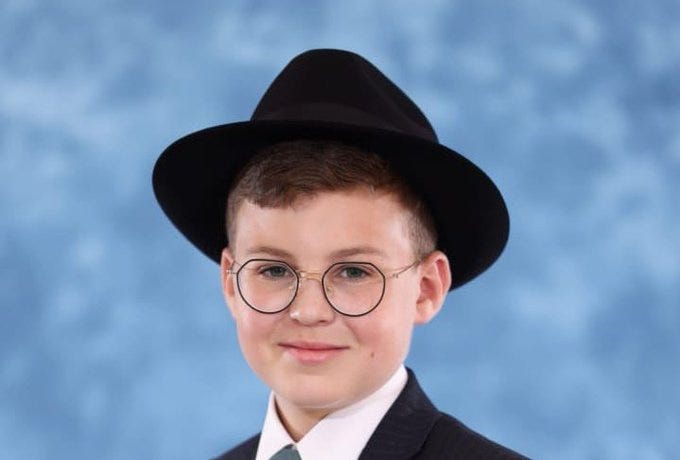
As must have been the case for anyone who became aware of this tragedy, my first reaction was one of profound sadness. Yosef Eizental, a 14-year-old Charedi boy, was killed after being run down by a city bus in Jerusalem during a recent protest by members of his community against the draft. A frustrated bus driver drove through a large crowd that was blocking the street and struck and killed young Yosef. I cannot begin to imagine what his parents are feeling right now.
This young man was simply acting on the directives of his religious leaders. Many of whom have engaged in truly over-the-top and deeply disturbing exaggerations about the supposed ‘evils’ of the IDF.
My sadness, however, quickly gave way to anger. Anger at those who are ultimately to blame for this tragedy (beyond the bus driver himself).
I don’t know whether any specific Charedi religious leader or group of leaders explicitly called for this protest. But it would not surprise me if they did since they have done so in the past. But even if they did not directly call for it, they certainly inspired it through their constant and vile anti-IDF and anti-government rhetoric.
One thing seems certain: they did not urge restraint, nor did they call for the protest to be halted once it began. They likely took pride in the fact that so many of their young protégés participated in what they viewed as a ‘just’ cause. Even though many non-Charedi religious leaders believe that cause is anything but just.
That said, they are certainly entitled to their opinion. As religious leaders – publicly addressing what they view as a religious issue is surely seen as an obligation to speak out forcefully on a matter they feel so strongly about, especially given the immense influence they wield.
But with the power to motivate tens of thousands of young students to act - comes responsibility. Responsibility that must be shared when the consequences turn tragic. And that is clearly the case here.
Of course, the primary fault lies with the bus driver, who panicked as a chaotic crowd began attacking his bus while fires were being set in the street around his bus. He is rightly being charged with manslaughter. There is no excuse for driving at an unsafe speed through a street packed with people. He had to know that someone would almost certainly be hurt or killed.
But the responsibility does not rest with him alone. It must be shared by the religious leaders who either told their young students to protest or inspired them to do so. And who failed to stop them.
Responsibility is even greater for those leaders whose opposition is uncompromisingly hardcore. Like those who oppose IDF service even in units specifically designed for Charedim who do not study Torah full-time—an option currently under consideration by the Knesset.
Although details are still being negotiated, that legislation has become more or less acceptable to key Charedi religious leaders. According to one estimate I saw this legislation could eventually result in approximately 23,000 Charedi recruits as the IDF expands specialized Charedi units like the Chashmonaim Brigades.
If that is the case, then this protest was clearly not endorsed by the Charedi leaders currently negotiating the legislation. They are, however, surely endorsed or at least encouraged by religious hardliners who reject even these units - citing anecdotal reports that the promises made to Charedi recruits have not been fully honored.
When Rav Aharon Feldman, a member of the Agudah Moetzes, opposes even these units based on unsubstantiated anecdotal claims, he wields enormous influence—at least over American students who are drawn into protests like the one in which Yosef was killed.
In my view, that places a measure of responsibility on him as well. Of course, he had nothing directly to do with this specific protest, and most of the protesters were likely Israeli. But Rav Feldman was echoing and reinforcing the rhetoric of Israeli religious leaders who inspired it. Instead of speaking out against such protests, he likely supported them - seeing them as a matter of kavod haTorah.
Except that in this case, a young innocent boy, inspired by that rhetoric, lost his life.
I am certain that Rav Feldman feels genuine rergret over what happened and has surely expressed sympathy to the family. I have no doubt about that. But the real question is whether he and his counterparts in Israel - will take any responsibility at all. More importantly, will they engage in a cheshbon hanefesh, the soul-searching that a tragedy like this demands? And will that soul-searching lead them to put an end to the kind of harsh rhetoric that could inspire future mass protests like this and put even more young lives in danger?
I sure hope so.
According to reports I saw, this occurred on a completely different street, not far from Bar Ilan where the "official" demonstration coordinated by police took place with no problems.
Looks like this was a breakaway group that that congregated around a bus on the basically empty street (with fires on the road and in trash bins). There are claims that they broke a window of the bus and pepper sprayed inside. The bus driver called the police but apparently got no response. Videos show him backing up but then suddenly zooming forward hitting the youth in front of him, turned a corner at high speed and hit more people. One witness said that they started counting down to zero and he sped forward when they reached zero.
It appears that he panicked. That doesn't justify his actions but explain why the police downgraded his charges from aggravated murder to manslaughter.
There needs to be soul searching in the Chareidi community about the anarchistic violence often accompanied with these demonstrations.
We have a death from a Haredi protest and a death at an anti-ICE protest. This is the nature of things, and mistakes will occur no matter the care we take. I may not agree with either protest, but they do have a right to protest. Within any movement, there will be extremists and people who make bad judgments. Leaders of both movements do not intend violence, but to make a point.
Part of the cost of free expression is a human toll, and we have to accept it and work to mitigate risks. Had Hamas protested the way either group protested, Israel would not have been in a war. That is the difference between responsible resistance and insanity.